

I gave a talk recently on something I think about a lot more than I probably should: risk. Not the dramatic kind, skydiving or gambling away a paycheck. The small kind. Sending the text while driving. Refreshing a stock app for the fifth time in ten minutes. Saying yes to one more drink when you already know how the night ends. We tend to explain these moments with willpower, or character, or the classic post-hoc “I should’ve known better.” I want to make the case that almost none of that is the real story.
The real story is happening within your skull, in circuits that were built for a completely different world than the one you’re making decisions in right now.
The paradox that makes this worth your time
Smart people make bad risk decisions constantly. Not occasionally, constantly. A trader who has the exact odds sitting in front of them still rides a losing position to zero instead of cutting it early (yes, still a victim of sunk cost fallacy). A driver who can recite the statistics on distracted driving cold still looks down at a text doing seventy. A gambler who understands the house edge perfectly well still feels, in his gut, that the next hand is due.
This isn’t a stupidity problem and it isn’t a discipline problem. If it were, more information would fix it. It doesn’t—not reliably. What’s actually going on is an architecture problem.
Your brain has two systems making the decision.
They don’t agree, and one of them is a lot louder and a lot faster than the other.
Two systems, one decision
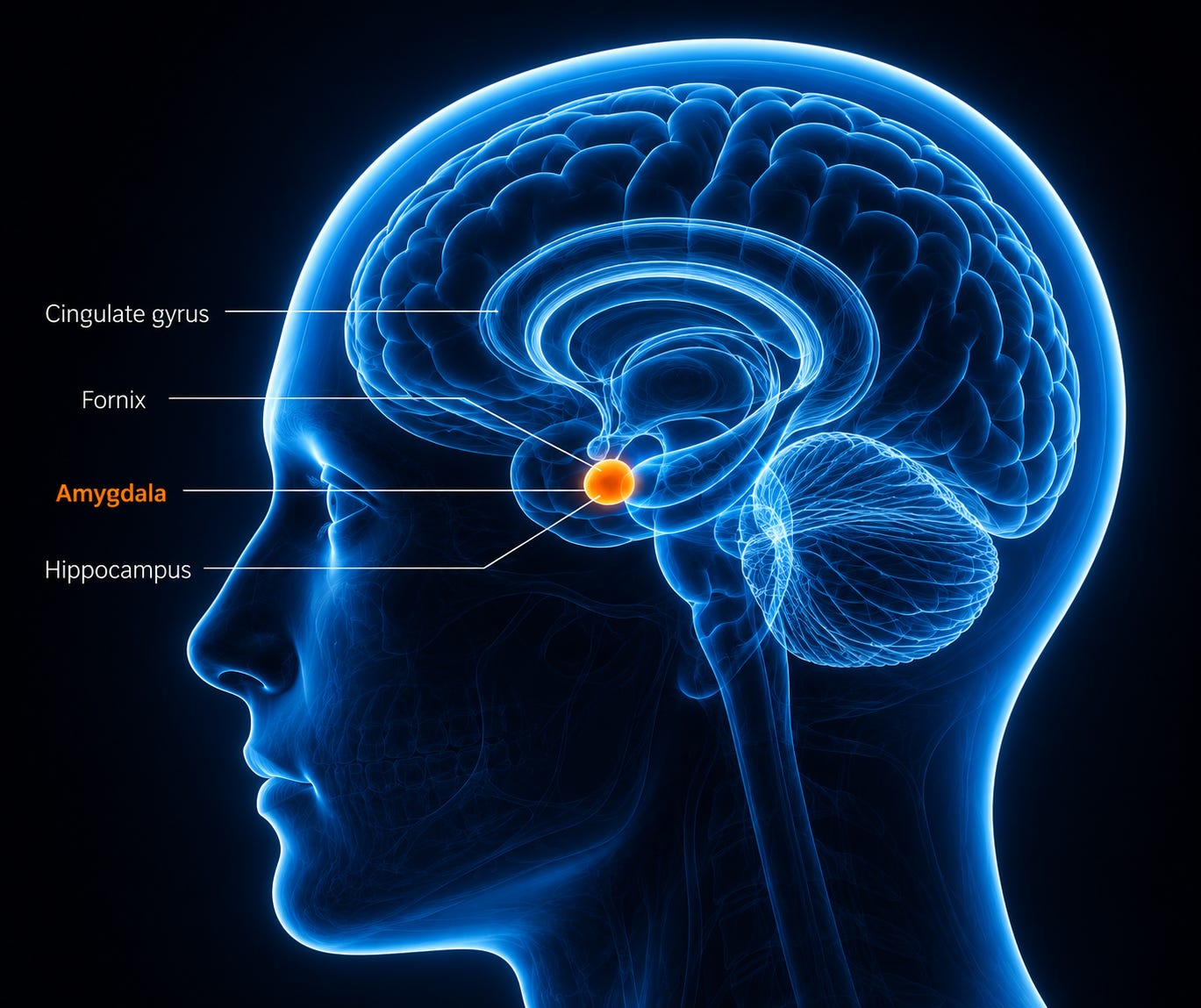
On one side, the limbic system. Fast, emotional, automatic. It includes the amygdala, the striatum (central to how you process reward), and the dopamine pathways running through both. This system evolved to react in milliseconds. It doesn’t wait for you to finish thinking, because it was built for a world where hesitating half a second in front of a predator was the difference between living and not living. Philosophy and financial literacy showed up a long time after this system did.
On the other side, the prefrontal cortex. Newest part of the brain evolutionarily, and the slowest to develop in each of us individually. It’s not fully wired until your mid-twenties. This is the part that weighs consequences, holds your actual goals in mind, and can, when it’s working, override the impulse coming from the limbic system.
Here’s the part that matters most: the prefrontal cortex is also the first system to go quiet under stress, fatigue, or strong emotion. Exactly when you need the referee most, the referee is the one most likely to leave the room. Every risky decision is a negotiation between these two systems, and the outcome depends heavily on which one is loudest in that specific moment, not necessarily which one is right.
The amygdala decides before you do
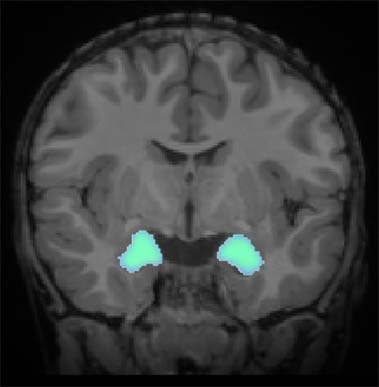
The amygdala can flag a potential threat in about twelve milliseconds. A single blink takes somewhere between a hundred and four hundred milliseconds. Your amygdala has already made a call on whether something is dangerous before you’ve physically finished blinking, and long before you’ve consciously registered what you’re looking at.
A few things worth sitting with here…
Uncertainty itself activates this circuit, not just confirmed danger. Your brain doesn’t need to know something bad is happening. It just needs to not know what’s happening, and that ambiguity alone is enough to trip the alarm. That’s a big part of why unpredictable situations feel stressful even when nothing has actually gone wrong.
Once triggered, the alarm recruits your whole body before the prefrontal cortex gets a vote. Heart rate, attention, posture, all shifting before a single conscious thought about the situation forms.
And this one matters if you’ve been under chronic stress for a while: repeated stress enlarges this circuit’s influence over time and shrinks the prefrontal cortex’s ability to talk it down. Your alarm system isn’t just louder in the moment, it’s structurally gaining ground over your brakes.
Dopamine was never about pleasure
I think this is the single most misunderstood piece of neuroscience in pop culture. Everyone calls dopamine the “pleasure chemical.” It’s better understood as a prediction signal, not a pleasure signal.
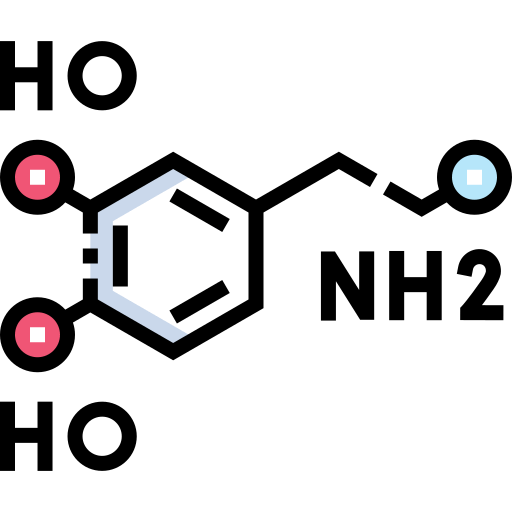
Dopamine neurons fire most when an outcome is uncertain, not when it actually pays off. Give someone a completely predictable reward, same treat, same paycheck, same result every time, and the dopamine signal barely moves after a while. Make that reward unpredictable and the signal spikes hard, especially in the moment of anticipation, before you even know what you got.
That explains something that used to puzzle researchers: why a near-miss feels almost as good as an actual win. Slot machine players know this instinctively, two cherries and then almost a third. That near-miss recruits nearly the same reward circuitry as an actual win. Your brain treats “so close” as functionally similar to “yes.” Slot machines, loot boxes, infinite-scroll feeds, all explicitly engineered around this exact mechanism. Variable, unpredictable reward is the most addictive pattern your brain can be exposed to, and it’s not an accident that a huge chunk of the modern economy runs on it.
Losses hit twice as hard as gains
This comes from Kahneman and Tversky’s prospect theory, which won a Nobel Prize. The headline finding: the pain of losing a hundred dollars is roughly twice as intense, psychologically, as the pleasure of gaining a hundred dollars. Same number, completely different emotional weight.
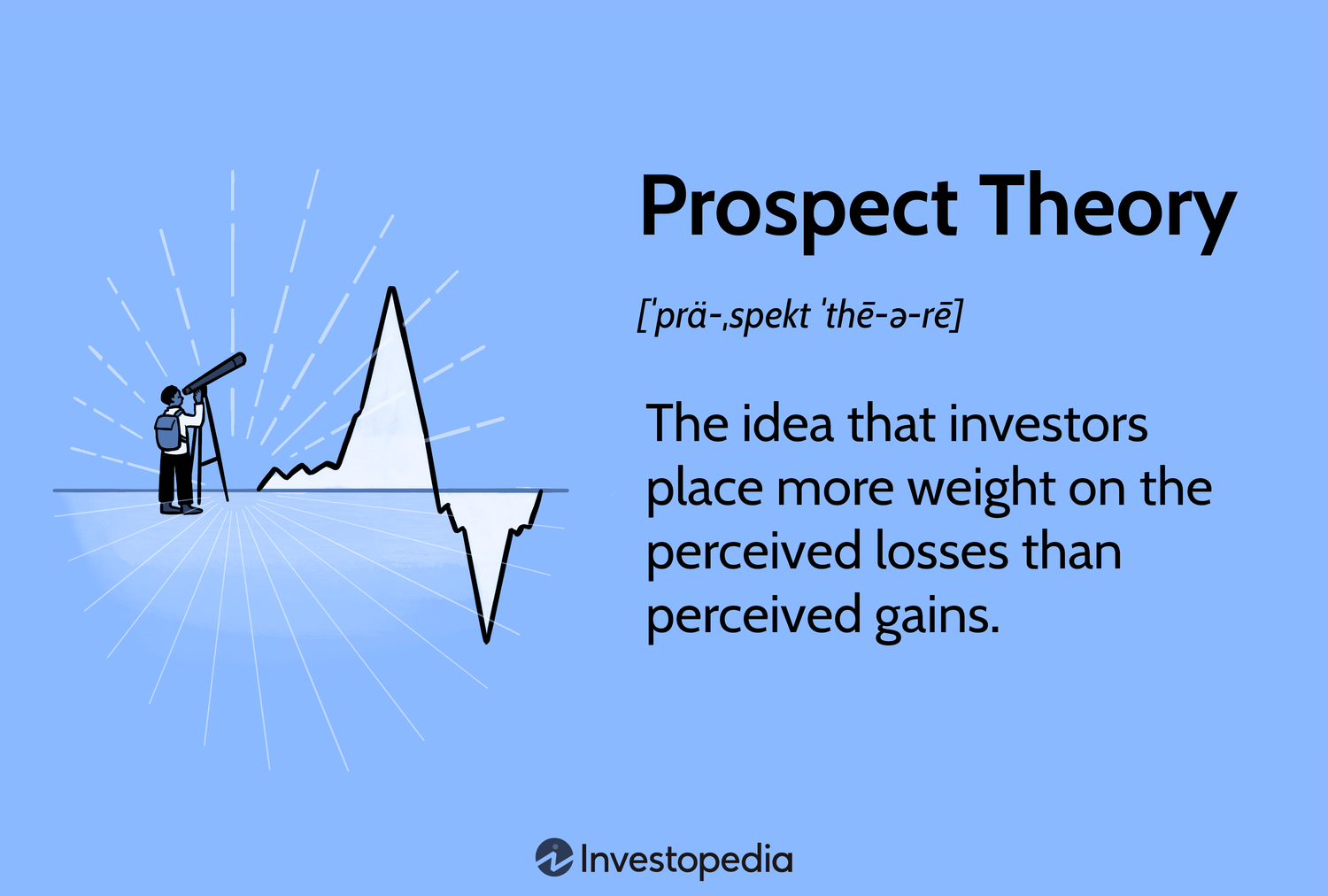
That single asymmetry explains a huge amount of irrational financial behavior. Investors hold losing stocks too long not because they think it’s going to recover, but because selling locks in the loss, and locking in a loss feels almost unbearable compared to just not looking at it.
Framing changes the choice too, even when the math is identical. Tell someone they have a seventy percent chance of keeping their job and they react completely differently than if you tell them there’s a thirty percent chance they’ll be laid off. Same number. Different decision.
Sunk cost, the thing where you keep watching a movie you’re not enjoying because you already paid for the ticket, is loss aversion stretched across time. Walking away doesn’t just feel like accepting you wasted something. It feels like losing twice.
Your risk tolerance isn’t fixed
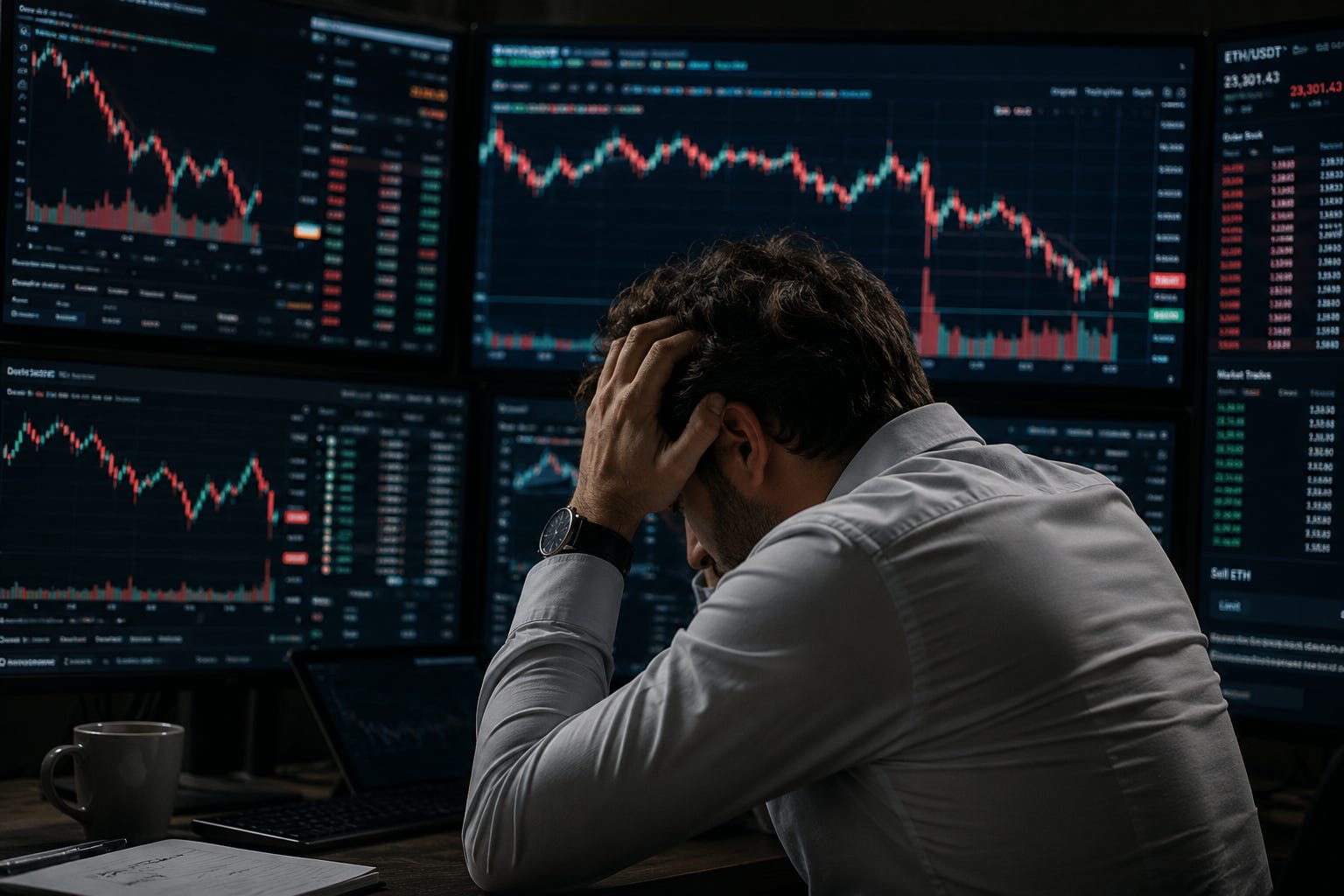
Your risk tolerance is not a fixed personality trait. It changes hour to hour, depending on your internal state, not on the actual odds in front of you.
Acute stress floods your system with cortisol and adrenaline, narrowing attention and tilting you toward fast, emotional decisions over slow, deliberate ones. You’re literally a different decision-maker under stress than when you’re calm, even though the math of whatever you’re deciding hasn’t changed at all. Sleep loss does something more specific. It weakens the connection between the prefrontal cortex and the amygdala. When you’re sleep-deprived, the brakes don’t just feel weaker. They’re structurally slower to respond…right when you need them most.
Same person, sound decision on a Tuesday morning…wildly different decision at one in the morning after a stressful, sleepless week. Not a different person. Just a different state running the same hardware.
Other people change the odds in your head
Risk isn’t private—it’s deeply social. One of my favourite findings from all this: merely being watched by peers raises activity in your reward circuitry during risky decisions, even when nothing about the actual risk has changed. The math of the bet is identical whether you’re alone or watched—your brain treats it differently anyway. There’s a kind of social contagion too. Watching someone else take a risk and succeed primes your own brain to underweight the downside next time you’re in a similar spot.
You just watched somebody win and your risk calculus quietly shifted.
Groups amplify it further: the average risk a group lands on is almost always higher than what any individual member would’ve chosen alone—and it’s not because everyone in the room is reckless. It’s simply a group dynamic.
This circuitry peaks during adolescence, when the reward system is already at maximum sensitivity and the prefrontal cortex still has years left to mature. So when people talk about teenage risk-taking, the honest answer isn’t “they don’t understand the danger.” The reward feels more intense to them, especially with peers watching, while the braking system is still under construction.
Built to exploit the circuit
Now I want to say this plainly: a lot of modern technology isn’t accidentally exploiting these circuits inside your brain. It’s deliberately and meticulously engineered around them.
Slot machines are the clearest case of this. Variable, unpredictable payouts on every pull, and the near-miss experience is not a side effect (as you learned earlier in this piece)…it’s a designed feature, because it keeps the dopamine signal firing without the house ever having to pay out.
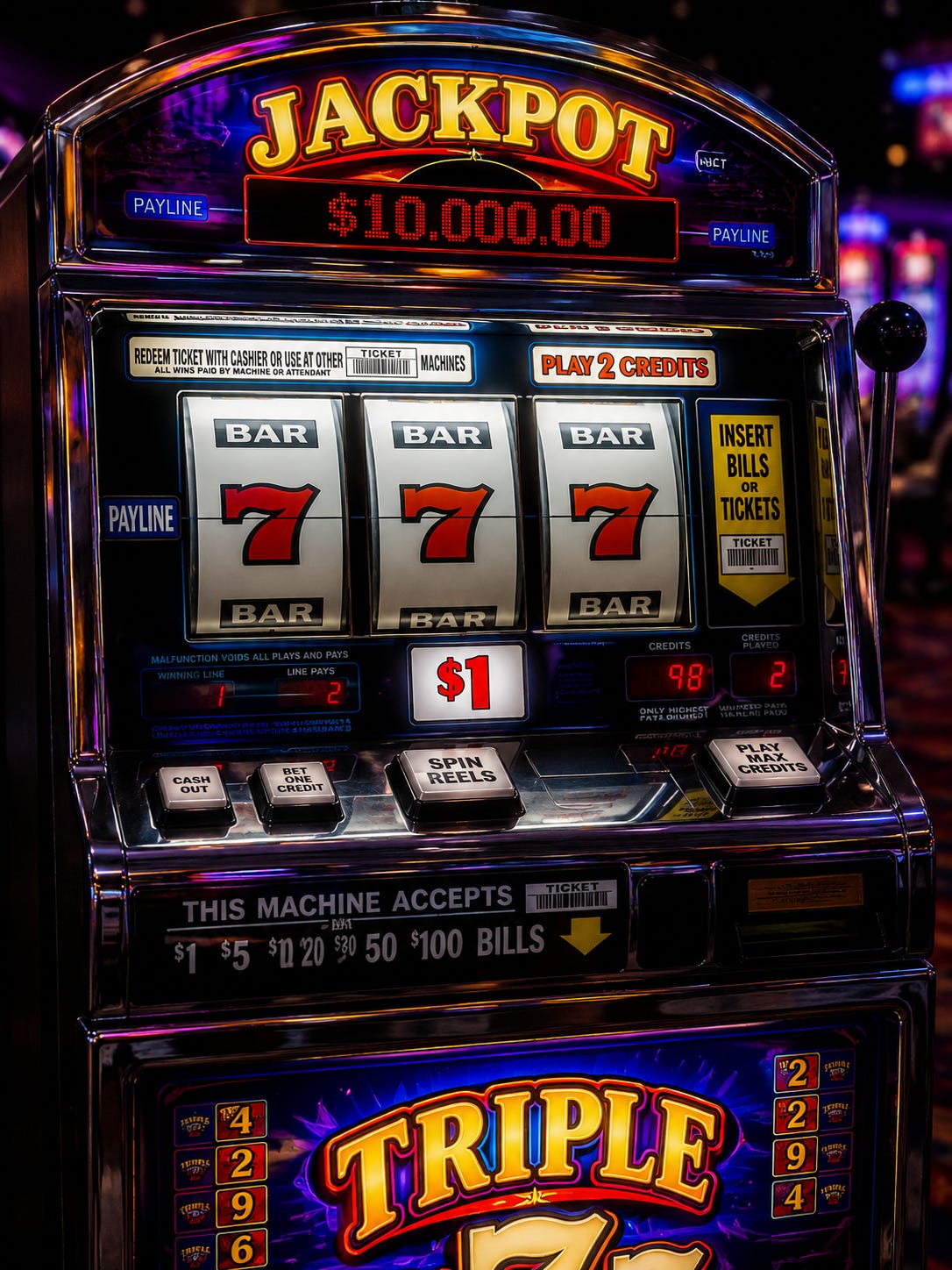
Trading apps and betting apps do the same thing in a different costume. Real-time price ticks, live odds updating constantly, recreating the exact same unpredictable, anticipation-driven pattern as a slot machine, just dressed up as financial literacy or sports knowledge instead of entertainment.
Knowing this neural mechanism doesn’t make anyone immune to it. I know it, you now know it, and none of us are suddenly immune. What it does is make you harder to fool, because you can recognize the pattern instead of mistaking the feeling of anticipation for the feeling of having actually made a good decision.
Outsmarting your own brain
Not vague advice like “use more willpower.” We just spent this whole piece establishing why that’s not a reliable lever. These are tools that work with the architecture instead of against it.
→ Pre-commit before the moment. Decide your exit point, your position size, your walk-away line while you’re calm, not mid-bet, when the limbic system already has the floor and the prefrontal cortex is offline.
→ Add friction. A short delay, an extra step, a confirmation screen before a risky action gives the slower system time to load back in before you act. Some trading platforms and self-imposed rules use a deliberate pause for exactly this reason. It’s not bureaucracy for its own sake, it’s giving your brakes a chance to catch up.
→ Reframe the loss. Ask what a stranger would do holding this exact position right now, not what you’ve already sunk into defending it. That question sidesteps the sunk-cost trap almost entirely.
→ Name your state, not just the odds. Before you check the numbers, check whether you’re stressed, tired, or excited. Those states change how you weigh the exact same risk. Knowing your state is itself useful information.
Your brain is not broken…
Here’s what I want to leave you with from all this. Your brain isn’t broken. It’s running software built for an ancestral world, not a casino floor or a trading app. The fast amygdala, the prediction-hungry dopamine system, the asymmetry between gains and losses…all of it made excellent sense for hundreds of thousands of years of human history. It just wasn’t built for slot machines or twenty-four-hour markets that are so prevalent in the modern world.
The goal was never zero risk, and I don’t think it ever should be. Risk is how anything interesting gets done. The goal is choosing your risk on purpose, with the slower system actually given a real seat at the table instead of getting overridden every time. That doesn’t start with some big resolution. It starts the next time you feel the pull, the next time your heart rate ticks up before a decision, and you give yourself one extra second to notice it.
This piece is written from a talk I gave on the neuroscience of risk-taking a couple weeks ago.
Love the point about the prefrontal cortex being the first to leave the room under stress. It really makes you think about the broader systemic side of things too. When people are dealing with chronic, long-term stress—like financial insecurity or systemic instability—their brain's 'alarm system' is basically forced to stay on high alert. Over time, that completely reshapes how someone calculates risk, and it has nothing to do with personal discipline. Such a great read!