

A friend of mine looked at an apartment last year that checked every box he’d written down: good light, fair rent, five minutes from the train station he used every day. He stood in the kitchen during the second walk-through and felt something close to dread, nothing he could point to, nothing he could explain to the landlord standing there waiting for an answer.
He didn’t take it.
Even now he can’t fully say why. Only that something in him refused, and he trusts that it was right to.
We treat a line like “my gut said no” as filler, something people reach for when they’ve run out of a better explanation. But there’s a real chance he was reporting live data from a physical organ that runs on its own, one most of us never learned existed. It has a name: the enteric nervous system. And it is not a metaphor.
The organ nobody mentions
Ask someone to describe the nervous system and you’ll get the brain, maybe the spinal cord, some vague picture of neurons firing behind the eyes. Accurate, but incomplete.
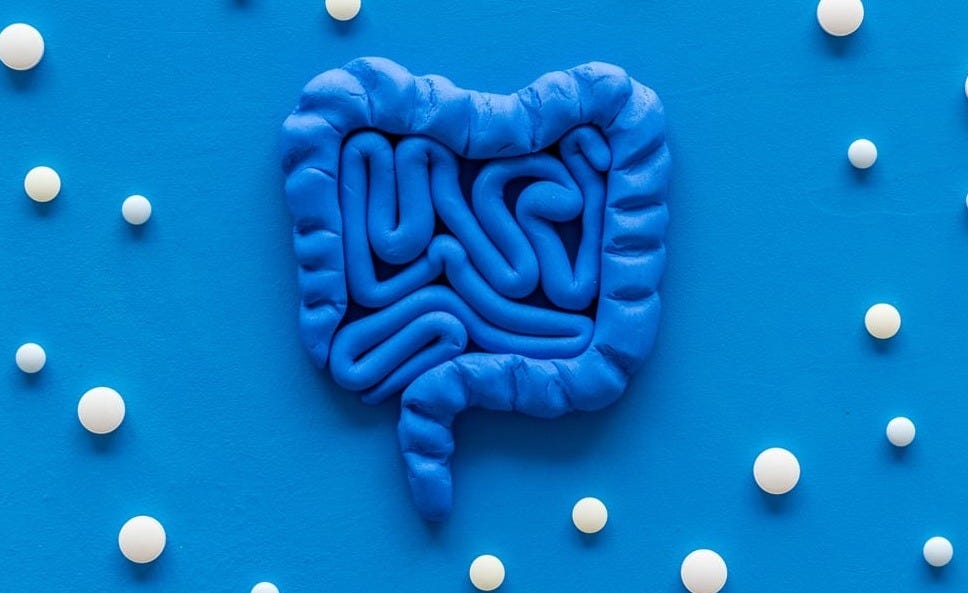
Lining the walls of your entire gastrointestinal tract, from your esophagus down to your colon, sits a network of more than 500 million neurons. Your spinal cord, the actual cable connecting your brain to the rest of your body, runs about 100 million, so the tube of tissue digesting your lunch right now outnumbers the wire linking your skull all the way to your legs, five to one. Scientists call it the second brain, and that’s not a nickname, it’s a structural description: a network that senses, processes, and responds to information entirely on its own, with no need to check in upstairs first. That’s a second executive, headquartered right in your abdomen.
Why your gut talks more than it listens
The enteric nervous system and your brain share the same starting point, a population of neural crest cells formed early in development, a portion of which migrate down and build an independent network inside the gut wall. It runs on its own clock almost from day one. The gut is one of the oldest organs in the human body, and its nervous system carries that seniority.
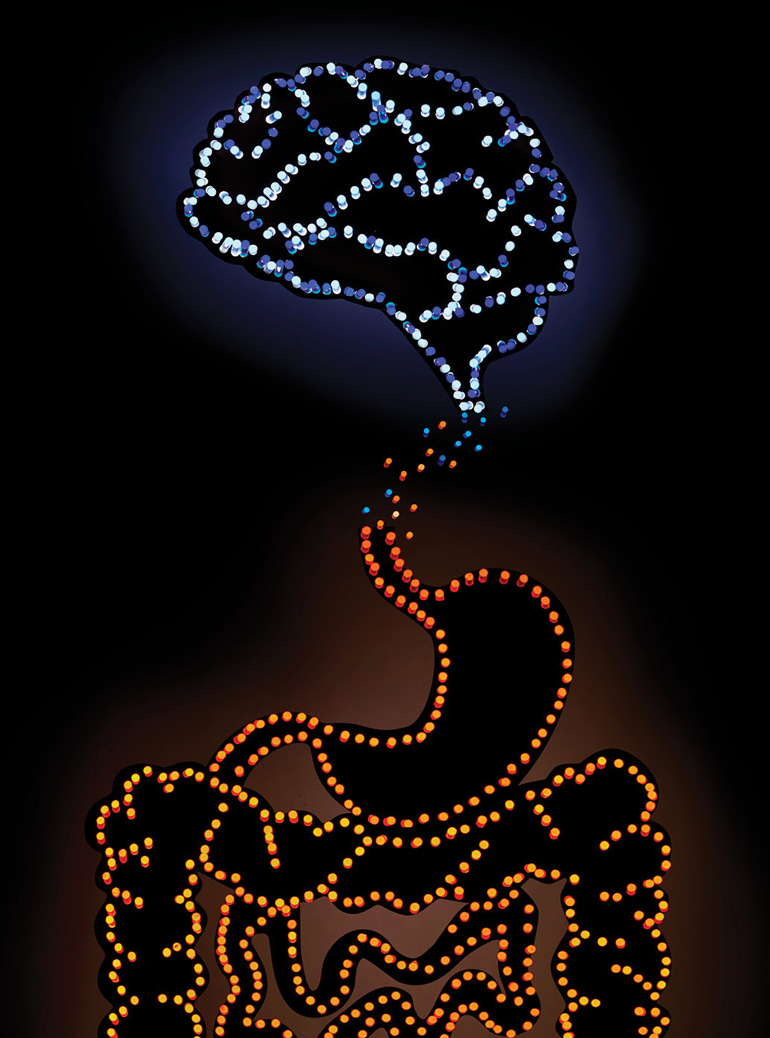
Roughly 100,000 nerve fibers run the highway between your brainstem and your gut. Eighty to ninety percent of them travel upward, gut to brain, not the other direction.
Your gut does most of the talking in that relationship. Your brain, for once, mostly listens.
That gut feeling my friend described before he turned down the apartment was a real, measurable electrical signal, climbing the vagus nerve into a brain that took it seriously whether he noticed it or not.
The serotonin split
Ninety percent of your body’s serotonin gets made in your gut, not your brain.
The two pools stay separate. The blood-brain barrier keeps them apart, so this isn’t your intestines flooding your skull with mood chemicals. Inside the gut itself, that serotonin drives muscle contractions, fluid secretion, and sensory signals headed straight up the vagus nerve; one molecule doing two entirely different jobs depending on where it ends up. When that signalling breaks, from infection, inflammation, or a microbiome knocked out of balance, the damage doesn’t stay in the digestive lane. It’s a real piece of why people with depression or anxiety show disproportionately high rates of gut symptoms, and why people with chronic gut disorders show disproportionately high rates of mood disorders.
When the second brain breaks…
Irritable Bowel Syndrome affects somewhere between 10 and 15 percent of the global population, close to a billion people. For decades medicine filed it under “probably psychological,” the default drawer for anything doctors couldn’t yet explain.
We know better now. IBS involves enteric neurons that have turned hypersensitive, amplifying routine gut signals into pain. That puts it in the same category as migraine, a real neurological event, never something anyone was imagining.
The gut-brain axis shows up in heavier territory too. In Parkinson’s disease, the hallmark protein clumps have turned up in the gut before they ever reach the brain, and researchers are tracing similar links to depression, anxiety, and autism spectrum conditions. Your gut is not just a side character in your neurological story. In some of these conditions, it might be where the story begins and is centered around.
So what do you actually do with this
Understanding that a second brain exists makes for a good dinner conversation. Taking care of it is the actual point.
Feed your microbiome on purpose. Diverse, fiber-rich food isn’t just fuel to a 500 million neuron network. It’s information the system uses to regulate itself. Treat stress like a physical input too, because that’s exactly what it is: chronic stress rewires how sensitive your enteric neurons become, and slow breathing, real exercise, and consistent sleep all shift gut-brain signaling in ways that are measurable, not just symbolic.
Take gut symptoms seriously. Persistent bloating, nausea, or IBS-pattern pain can be a neurological signal, and it deserves the same clinical attention you’d give any other symptom coming out of your nervous system.
Trust the signal when it shows up.
When your gut speaks, it isn’t being poetic or anything like that. It’s a real neural channel, briefing your brain on your internal state around the clock, whether you’re actively listening or not.
For most of modern history, we told ourselves a tidy story: the brain runs the show, the body follows orders, and anything below the neck exists mainly to keep the CEO alive.
The wiring never supported that story. Command runs the other way more often than we’d like to admit, and it has for as long as we’ve had a gut at all.
Next time something in you says no before your logic finishes catching up, you might not be overthinking it.
You might be listening to the only other brain in the room.
See you at the next neuro piece ;)
Great article! Ties together mood, IBS, and Parkinson's in a way that actually makes sense together. Didn't know slow breathing and sleep could actually help gut symptoms too.